The Web Privacy Podcast
A Privacy Leader’s Playbook for When the Regulator Comes Calling

 33 MIN





Summary
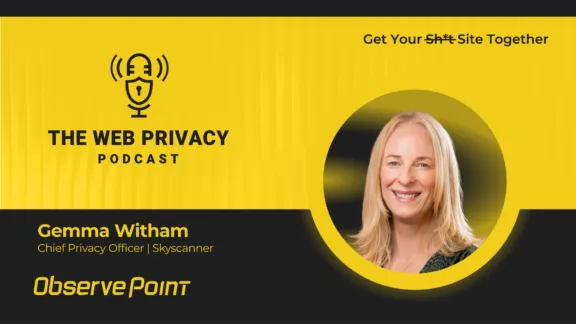
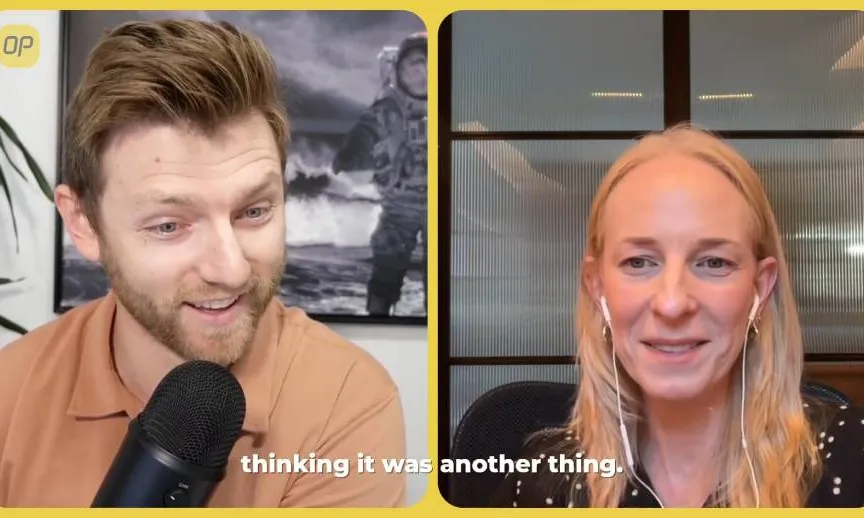
A privacy regulator’s letter lands at 9am, naming a specific webpage and a third-party ad tag that fires before consent is logged. What do you do first? Gemma Witham, Chief Privacy Officer at Skyscanner, walks host Ethan Prete through her playbook in the new segment The Regulator Who Asked First: stay calm, scope the request precisely, find out where it came from, run it as an incident, brief the C-suite early, and approach the regulator as a collaborator rather than a defendant.
Gemma also explains why Skyscanner’s PrivTech team, engineers embedded in the privacy function and trained on the why through IAPP courses, has transformed how fast her team executes, why a no-blame culture is how you get to the truth, how regulators like the ICO now ask technical, harm-focused questions that a cookie banner alone cannot answer, and why a CMP is the start of compliance, not the end of it. She closes with advice for the next generation of privacy leaders: stay curious and keep asking until the engineers explain it plainly. Essential listening for privacy, legal and marketing leaders responsible for what their websites actually do.
33 MIN
Podcast Transcript
The Web Privacy Podcast - Gemma Witham
Ethan Prete [00:00:00] Good morning, good afternoon, and good evening, privacy professionals alike, and welcome to yet another episode of the Web Privacy Podcast. The best place, in my opinion, for me to fulfill my dreams of trying to simplify the very difficult space of web privacy. And for those of you that have joined the podcast before, you understand that we do this by bringing together, I'd argue, the brightest minds in privacy from all around the world to share their cutting-edge ideas.
Ethan Prete [00:00:26] My name's Ethan Preet. I'm the host of the podcast. And today we are very lucky and fortunate to be joined by Gemma Witham. Gemma, we're gonna put you in the hot seat today. I'm not gonna lie. And I don't want to give any spoilers away and ruin your
Gemma Witham [00:00:37] You
Ethan Prete [00:00:37] story early. but I have noticed that before we jump into what I like to call the new segment of The Regulator Who Asked First, I noticed that you've collected quite a few titles in the same way somebody like me aspires to
Gemma Witham [00:00:49] Mmm.
Ethan Prete [00:00:50] collect fantasy football championships. So before we get started, would you mind walking through who you are?
Ethan Prete [00:00:56] What your title or titles are?
Gemma Witham [00:00:58] Sure. Hi, thank you for having me as well. So thank you very much for having me on the show. My name is Gemma Witham. I am a VP of legal at Skyscanner. So we're a meta search travel company based in the UK, but operating globally. I also at Skyscanner look after risk and compliance. So I'm responsible for the risk and compliance frameworks.
Gemma Witham [00:01:24] I'm also the Deputy General Counsel. So guess they're the titles I've collected there. My career journey's been quite straightforward in that I've always been a lawyer. I've always focused on data protection. That's always been my kind of core specialism. I've worked across kind of startups, Fortune 500s, FTSE 100s in the UK and tech co. So I've had quite a kind of varied career, but always privacy has been like the main part of my career.
Gemma Witham [00:01:53] I guess I've done compliance and risk historically as well. And I think privacy leads quite neatly into those areas just because a lot of what I've done over my kind of nearly 20 year career is quite transformative and quite based on risks and, you know, based around compliance framework. So I guess they all sort of tie in together. And I guess as you go through different companies, everyone gives you a new title. So I have probably collected more titles than I probably earned over the years, but yes, that's me.
Ethan Prete [00:02:22] Love that and g and good for you too. If you don't mind me asking,
Gemma Witham [00:02:23] Mmm.
Ethan Prete [00:02:25] obviously again, the twenty year career with the companies that you've worked for is just an awesome and illustrious career. So first off, congratulations to that. But
Gemma Witham [00:02:32] Thank you.
Ethan Prete [00:02:33] I am curious, what have you seen change over your entire career in terms of web privacy
Gemma Witham [00:02:37] Yeah.
Ethan Prete [00:02:38] compliance? The landscape has changed quite a bit, obviously, but what have you seen?
Gemma Witham [00:02:41] Yeah,
Gemma Witham [00:02:41] I mean it's completely changed. When I started doing privacy, I think it was one of those notional roles that you did kind of part-time as a commercial lawyer where you checked a bit of due diligence for a corporate deal. It was kind of not the focus of the deal or the transaction or the lawyer's job.
Gemma Witham [00:03:04] The laws weren't particularly being enforced, particularly in the UK and Europe at that time, albeit that was probably the most enforcing market compared to say the US or Asia, but it wasn't particularly taken as seriously as it is now. So, I mean, I've always really enjoyed this area. I've seen it kind of develop and grow. But I think, you when people said to me historically, what's your area of specialism? was like data and data privacy.
Gemma Witham [00:03:32] I wasn't taken as seriously as maybe I am now. And definitely I have a seat at the table much more now than I probably did earlier in my career with regards to kind of deals, transactions, product development, just because, you know, data and data protection and platform regulation is just at the core of what most companies do now. And it is obviously enforced globally. So for sure it's changed completely.
Ethan Prete [00:03:57] That that's very much in line with everything that I'm hearing. I've mentioned
Gemma Witham [00:03:59] Mm-hmm.
Ethan Prete [00:04:00] a few times in the podcast. I I've I've been fortunate enough to have a great audience with various chief privacy officers, whether in the forms of meetups that we do around the country or events or just kind of get togethers and things. And that
Gemma Witham [00:04:11] Mm-hmm.
Ethan Prete [00:04:11] conversation tracks perfectly. And it feels like a lot of them understand that one, there's some immense job security right now because it's never been more important.
Gemma Witham [00:04:17] Yeah.
Ethan Prete [00:04:18] But I love what you said about having that seat at the table. And so I again
Gemma Witham [00:04:21] Hmm.
Ethan Prete [00:04:21] I hope that continues for better or worse, obviously. But
Ethan Prete [00:04:25] It's just an awesome, awesome field to be in right now. So Gemma,
Gemma Witham [00:04:28] Thank you.
Ethan Prete [00:04:29] let's let's jump right in because you have an amazing story and I want to make sure we give it all the time in the world. I know we're gonna talk today about, you know, when a privacy regulator sends you an inquiry about
Gemma Witham [00:04:38] Mm-hmm.
Ethan Prete [00:04:39] your web tracking, we wanna talk about how you're gonna handle that before it turns into one of those front page headaches where you're not sleeping at night for, you know, two, three weeks. So
Gemma Witham [00:04:46] Mm-hmm.
Ethan Prete [00:04:47] I wanna just start by asking, w as as someone who sits in your seat,
Ethan Prete [00:04:52] When you hear or see that a privacy regulator has reached out with an inquiry, what is your first reaction?
Gemma Witham [00:04:57] My first reaction is to stay calm. I think I have seen many times just the sheer panic from either the receptionist or the person that's brought it to me. I said, my goodness, you know, there's a letter here, you need to read it. So I guess always stay calm, always understand exactly the scope of what it is. So like, is it a specific area of our website? Is it our app?
Gemma Witham [00:05:23] Is it a market? I mean, it will be a market, presumably, if it's coming from a specific country regulator, but like, what's the extent of what they're actually asking? So really deep dive early on into like exactly what the question is. I think also understand possibly where this has come from. So like, is this part of their annual plan? Did we know that this was something on their agenda or has it potentially come from some customer complaints? So none of those should be surprises, just to be clear, like you should be horizon scanning.
Gemma Witham [00:05:52] to understand what the focus of the regulators are, what the consumer groups' focuses are. And also, you should also have statistics on what those themes of customer complaints are that coming through. I would then also want to understand, once I understood what the issue at hand was, what our current internal position is. And again, that should not be a surprise, but I'd want to pull together a...
Gemma Witham [00:06:15] an incident team, let's say, at this stage to really deep dive into what the actual facts are and what does this mean at our company.
Ethan Prete [00:06:24] Yeah, I love that. obviously again, this this typically involves multiple teams. how often
Gemma Witham [00:06:30] Mm.
Ethan Prete [00:06:31] do you find that like the privacy legal compliance team are surprised by the things that are being presented? So like the technologies that are running on the website.
Gemma Witham [00:06:41] I mean, I think the reality is that you shouldn't be surprised because you should be having these monitored. You should be having kind of teams owning them, checking them, auditing them. But I think sometimes these things do cause you a surprise because obviously human error can happen. I guess the downstream addition of tags on websites is very, very hard to control. The only way you can really do that is by auditing and then remediating.
Gemma Witham [00:07:09] So I'd like to say that it shouldn't be a surprise and I hope it wouldn't be, but I think sometimes, you know, these things can, you can be taken by surprise by these things.
Ethan Prete [00:07:20] Yeah, I I th I think it's hard not to. And again, I I always tell people
Gemma Witham [00:07:22] Mm.
Ethan Prete [00:07:23] I have a ton of empathy. As somebody who owns a marketing
Gemma Witham [00:07:25] Yeah.
Ethan Prete [00:07:25] team, there are so many companies, especially in the large enterprise space where you have sub brands as well. And so if you have sub brands of companies who are all trying
Gemma Witham [00:07:31] Yep. Yep.
Ethan Prete [00:07:34] to use one consent management instance that have multiple marketing teams or marketing agencies, all of which are putting technologies on there. Like
Gemma Witham [00:07:42] Mm.
Ethan Prete [00:07:42] I I put myself in the shoes of a chief privacy officer or a a G C and I'm thinking to myself, I I wouldn't even know that and I'm the head of marketing.
Ethan Prete [00:07:49] you know, across
Gemma Witham [00:07:49] Mm-hmm.
Ethan Prete [00:07:50] the board, across multiple brands. And so it is a difficult space, but I think finding some way to audit that and like you said, not overreacting is probably gonna go a long way.
Gemma Witham [00:07:58] And these things move
Gemma Witham [00:07:59] at pace as well. you know, what you think you knew a week ago might not be what you know in a week's time. And I think people that own these tags leave the business sometimes. So you have like this ownership issue as well. So it's very, very difficult. And I also have sympathy with other people in my shoes trying to understand this area.
Ethan Prete [00:08:20] Well, absolutely. And you know, we this is a little bit self-promoting here, I guess, but we're about to launch a tool just because again, we've we've had the same issue internally on our side, but it's when you see the name of a cookie or a tag and you're trying to recognize what that is. And so you're spending all this time on a tool like a cookiepedia or something, just to not find the answer. And you're like, Okay, what is this? Who placed this and what is it actually doing? And so we're actually launching a tool because
Gemma Witham [00:08:44] Mm.
Ethan Prete [00:08:45] again, we've had the same headache as everybody else of identifying what these actually are.
Gemma Witham [00:08:50] Yeah. Yeah.
Ethan Prete [00:08:50] Who placed it there? Because again, they
Ethan Prete [00:08:51] might they might be that they might they may have left, but if Bill from IT placed something on the website, it's nice to know at least what it's for and who put it there. So you can go track that down and ask that person directly.
Gemma Witham [00:08:59] Exactly. Exactly.
Ethan Prete [00:09:04] let's actually dive into this again because Jim, I I don't
Gemma Witham [00:09:06] Mm.
Ethan Prete [00:09:06] want to waste your experience here. And so let's
Gemma Witham [00:09:08] Mmm.
Ethan Prete [00:09:08] let's set the stage for a scenario, if you don't mind. And let's for this, let's just say there's a a mid to large enterprise and they get one of these inquiries from a regulator. And let's say either I don't know, a state attorney general or a European DPA. I I actually don't know that there's a huge difference there, but the letter points to a specific webpage and claims that third party advertising data is being collected via a tag, obviously.
Ethan Prete [00:09:32] And cookies are being set and transmitting this data before consent is logged
Gemma Witham [00:09:36] Mm.
Ethan Prete [00:09:37] so if this letter came to your desk at nine AM, what are the first three or four things that you're doing?
Gemma Witham [00:09:44] I mean, I think I would repeat and echo the things that I said kind of to answer your question earlier, but it would be really understand in detail what they're asking. And then I guess running pre-consent, you'd again need to go and check exactly what's going on. A lot of the CMPs, guess, would be useful to look at at that point. If you're using a CMP, whatever your tool is internally, you would need to pull together the audit team, as I said before, I think they'd be very helpful.
Gemma Witham [00:10:13] I'm lucky enough in my current world to have actually a PrivTech ProdEng team. I would definitely be looking to the PM in that team to help me understand that as well. I'm probably the marketing team as well. And then I would probably run it as an incident just so I got the right traction, the right amount of focus and the right amount of prioritization. I'm sure, you know, it would be taken seriously given the nature of the request, but just to make sure we had the right kind of focus.
Gemma Witham [00:10:44] I would raise the fact that I had that internally with the appropriate C-suite as well, just to make sure that I was being very transparent upfront about what we had, remaining calm and telling them that this was kind of in hand. And I would put back as kind of progress was kind of being made as to uncovering what it was. And again, looking to see, we the only company? Are other companies being targeted in this way? And really where did it arise from? So quite a repeat of what I said earlier, but I think they...
Gemma Witham [00:11:13] they are the main areas I would be initially focusing on.
Ethan Prete [00:11:16] I
Ethan Prete [00:11:17] love that. And and kinda if I didn't if you don't mind me asking, what
Gemma Witham [00:11:19] Yeah.
Ethan Prete [00:11:20] has been your experience with regulators? Do you feel like they typically understand the technology and like what they're presenting to you is mostly accurate? Or is there maybe a balance there?
Gemma Witham [00:11:30] I think there's a balance there. think it depends with this, which level. I mean, I talk mostly from my European experience, I guess, but it depends at what level in the organisation they are. I would say that the more senior people have less, sometimes real technical understanding. I am impressed more and more with regulators, the European commission, et cetera, having actually specialist.
Gemma Witham [00:11:56] technology advisors that actually come to these meetings with companies. And then we would match that with kind of equivalent tech people outside to make sure that you can have those kind of informed conversations. So I think it varies definitely by regulator, by seniority. If you've just got a case officer that's got a customer complaint, they're probably not gonna know as much as maybe a specialist team that's investigating a sectoral issue. And then if it's a kind of...
Gemma Witham [00:12:26] high level data breach and you've got maybe an enforcement team, I'm not sure that they're going to have necessarily the ability to have such technical conversations. I think the UK regulator has really invested in good people to try and be technologically minded. And I think you can see that through their guidance, where it is quite technical and quite kind of user friendly in that respect. So I think again, it varies from regulator to regulator and then person within that organization as well.
Gemma Witham [00:12:56] yeah.
Ethan Prete [00:12:58] I like that. We we had a guest in the podcast a f a few weeks ago, Pari was her name, and she comes from an experience in big tech. And she shared an example of in that case it was D SAR and it was some of the rules specific to Germany as it relates to D Sar, but she
Gemma Witham [00:13:12] Mm-hmm.
Ethan Prete [00:13:12] had mentioned that the regulators were very easy to work with and very willing to work with her and her organization. Has that been your experience as well where you the regulators come and you feel like there's a lot of back and forth that they're willing to give you?
Gemma Witham [00:13:23] Yes, I actually do. I think it is quite a collaborative approach. I guess it depends what the issue at hand is and how serious it is and how far from compliance the company is at any point in time. So I can see that they definitely want to be collaborative and they want to kind of cause the harm, stop the harm.
Gemma Witham [00:13:48] But at the same time, their role is to remediate and to make sure that companies take it seriously and take changes. So guess they're always going to be on the sort of front foot of trying to find out what's gone wrong. But my experience has always been very positive, yes. And I think that works two ways. So it's for the chief privacy officer to not be immediately defensive as well. It's to kind of be very much like.
Gemma Witham [00:14:14] you know, well, we want to help, we want to understand what's going on here, like we're here to support, you know, we take this seriously. And I think if you can see that genuineness coming from the company and the chief privacy officer, you're going to get a much better response from the regulator as well, rather than just being like, I didn't do it, it's not me. That's not going to have the same response and reaction. So it's a two way street.
Ethan Prete [00:14:35] Which honestly makes a lot of sense.
Gemma Witham [00:14:37] Yeah.
Ethan Prete [00:14:38] I'm not sure how common this would be in your case, but let's say in this scenario the regulator asks for a complete list of third party technologies that are firing across your web presence.
Gemma Witham [00:14:46] Mm-hmm.
Ethan Prete [00:14:47] How would you go about gathering something like that and ensuring accuracy?
Gemma Witham [00:14:51] I would call someone in my PrivTech team and ask them to take accountability for that. In my seat, I don't trust that I would be able to have the technological answer in exactly the same way that they would. So I would find someone technological within the team that would be able to do that for me. So I would reach out to them and I guess they would use tools that we have and then they would probably use the audit team as well to validate that and verify it. Potentially go externally if it was needed to have that kind of.
Gemma Witham [00:15:20] additional verification layer that we would be submitting externally to a regulator. But I would definitely be using someone in the sort technical team to do that on the PrivTech team.
Ethan Prete [00:15:32] I love that.
Ethan Prete [00:15:32] And I the relationship between your proof tech team and you is something that I I want to dig into a little bit because
Gemma Witham [00:15:37] Yeah.
Ethan Prete [00:15:37] I I feel like I I usually get that answer when I talk to privacy professionals that they either do have that access to that or they're usually outsourcing talent from various product teams wherein they can lend them engineers. But w one of the things I'm
Gemma Witham [00:15:49] Mm.
Ethan Prete [00:15:49] hoping to get at here is you know, piggyback tags is one example of something high on the risk list. obviously you sit on the legal compliance side and they sit more on the technical side.
Gemma Witham [00:15:59] Yeah.
Ethan Prete [00:16:00] Are there things that you're
Gemma Witham [00:16:01] Yeah.
Ethan Prete [00:16:01] asking them to be looking for and are there things that they're trying to warn you of?
Gemma Witham [00:16:06] I mean, it's a two way conversation always. mean, the lawyers and the legal professionals are kind of setting the requirements, but there's different ways that you can obviously implement those and operationalize those. And that's where, you know, the legal teams have failed historically in being able to actually really have control over these such technical risks. And that's where obviously the Prif Tech team really come into into play because that's, you know, that's their training. That's what they're there for.
Gemma Witham [00:16:36] So I've had a ProTech team for nearly three years now, and it's honestly been life-changing in the speed that we've been able to execute. Actually, the way we have worked together to kind of solutionize different issues, like a new product, don't know, operationalizing a DSAR in a much more efficient way, using AI. We've been able to kind of use AI collectively to speed up some of this.
Gemma Witham [00:17:05] And actually I've been really impressed with the team and how they've wanted to upskill on kind of my area as well. So they've wanted to do some of the IAPP courses so that they can really have a broader seat at the table when it comes to like having impact and influence. So it's been completely a game changer for privacy lawyers to have teams like this.
Gemma Witham [00:17:28] And to see the value as well, I think in the risk reduction from them, we've had to take them away from ROI. We've had to take them away from revenue generating, for want of a better word, services, products. So we had to really justify that, but it's for sure been a game changer for my team to be able to have people like that to work with.
Ethan Prete [00:17:58] Yeah, I was actually gonna ask that question too of you know, what is the importance for them to have that at least basic understanding of the space, aside from being technologists? I mean, would you recommend everybody in that space who's the technology serving, you know, a privacy analyst or something to have the IAPP background?
Gemma Witham [00:18:13] Yeah, I think so. think doing a course in kind of really understanding what the law is and why is really helpful because I think this, know, lawyers think one way, tech people think another way, product managers think another way. And when you've got the three in a very informed way, working together, you get the best, you know, you get the benefit of all of that, I think. And certainly, I'm thinking about people in my team that have taken
Gemma Witham [00:18:40] a genuine interest in wanting to upskill in sort of the theory behind some of the operationalization of like privacy requirements. I think they're the ones that come up with the better ideas because they understand the rationale. And sometimes you have to really go back to why are we doing this? What's the harm? What are we trying to mitigate? So I do think it's a useful investment for companies to offer some kind of a training for these teams.
Ethan Prete [00:19:08] Love that. And and I believe as actually Marcus from Databricks had mentioned to us that if you want to do a true risk analysis, that means you have to understand the upside of these technologies before
Gemma Witham [00:19:17] Exactly. Yeah.
Ethan Prete [00:19:18] you can say, well, how much am I risking? And so I love that too. Get give them an idea of what the space looks like and then they can make
Gemma Witham [00:19:24] Yeah.
Ethan Prete [00:19:24] informed decisions about well, hey, I understand the technology. I could push it to these limits without crossing any lines, keep us safe while also giving, you know, the analytics team what they need to have a better experience with the consumer. So
Gemma Witham [00:19:33] Yeah. Yeah.
Ethan Prete [00:19:35] love that.
Ethan Prete [00:19:36] I was gonna ask as well, you you mentioned earlier in the conversation that most of your experience when it comes to working with these regulators comes from the UK or maybe even the European region. I can't remember exactly the words you used.
Gemma Witham [00:19:46] Yeah. Yeah.
Ethan Prete [00:19:48] but I'm curious, is is there an area where you feel like you've spent maybe a disproportionate amount of time working on these types of things, whether that's with the ICO or with GDPR or other
Gemma Witham [00:19:59] So I wouldn't say necessarily with regards to working closely with a regulator. I think all privacy professionals do this job because they want to have an impact and they want to protect and they want to protect individuals privacy, their right to a private life and they want to kind of protect that harm. I think we all know those pieces of legislation that in my mind and others mind really doesn't go to that harm element. So when you think about some of the
Gemma Witham [00:20:27] paper exercises, the sort of contracting exercises that you have to do, which is important to ensure that you've got sort of downstream accountability, don't get me wrong. But I think sometimes the kind of prescribed over-engineering element of that isn't really allowing teams to focus on where they could really have impact. So I wouldn't say my interactions with regulators, you know, are difficult or whatever in that respect. I think it's more about
Gemma Witham [00:20:57] making sure that we are focusing on the right things at the right time and focusing on reminding ourselves what we're trying to do here with regards to harm. And I think sometimes some laws have become a little bit too much of a paper exercise and not really focusing on the right harms globally, I would say, not just in the UK or Europe. So yeah.
Ethan Prete [00:21:21] Yeah, I it kinda feels like you're alluding to I'm just gonna ask the question and I'll let you answer it if you feel comfortable. But obviously private litigations have been on the rise in this space, maybe people who are interpreting laws differently. what has been your guys' experience there?
Gemma Witham [00:21:35] I think that's more in the US to be honest. So I guess we outsource our US legal advice. So I'm not a US lawyer, so I can't kind of apply on that. But I do think that it appears to be much more litigious on very minor grievances in the US. I would say a lot of the...
Gemma Witham [00:22:04] consumer groups drive, certainly in the EU and the UK, action from a regulator. And I possibly think that some of these consumer groups pick what would be an easy win for them to say, hey, look what I've done, I've changed this piece of legislation. When not really thinking about the actual harm.
Gemma Witham [00:22:26] and where they could maybe be focusing their efforts better if they genuinely wanted to protect individuals. I'm not saying I'm not for consumer groups. I think everybody has a role to play in this ecosystem. But I think it would be nice if regulators were like a bit more focused and back to kind of that real harm and where they can really, really help, you know, this kind of super evolving changing world that we're kind of operating in now.
Ethan Prete [00:22:51] I love that. And honestly, I think it comes down to each one of us if if we feel like we're the ones who understand the space and having those relationships, like you mentioned earlier, it's it's probably more of a two way street and making sure we're helping inform the regulators whenever we get an audience or whatever. And sometimes
Gemma Witham [00:23:03] Yeah. Yeah.
Ethan Prete [00:23:05] sometimes there are conferences and things, and I know the GDPR has their conference, but even the IAPP, a lot of times these these regulators will join. And so I think the more that all of us can kind of band together and make sure that we're expressing where these consumers actually need protection, I think that sets everybody up nicely.
Gemma Witham [00:23:18] Yeah. Yeah,
Gemma Witham [00:23:20] I agree.
Ethan Prete [00:23:22] you had mentioned before, again, you you painted a perfect picture, Jim. I know in in some regards you've kind of made it sound easy. You know, everyone gets together, you don't you don't overreact. have there ever been experiences where you feel like teams have been frustrated and maybe that's turned to finger pointing?
Gemma Witham [00:23:39] My experience, no, but I could see how that could kind of play out in a heightened state of kind of like, you know, stress from receiving a regulator's letter. I think my role in that situation or in that, you know, engagement would be just to be super clear that the purpose of this is not a blame game. The purpose of this is to really understand what's happened. Like, I can't defend the company.
Gemma Witham [00:24:08] if I'm not being told the truth and the quicker I get to like what's happened, the quicker I can kind of defend what's gone on here, if anything, obviously. And we very much have, I very much worked in companies where there has been a no blame culture and I think that's really important. So I would reiterate that point, reinforce that point and make people feel comfortable enough so that they could look into what's happened. And I've seen that happen.
Gemma Witham [00:24:36] I guess maybe not where it's had like a regulatory consequence, but certainly I've seen kind of fail forward as a core part of a lot of businesses that I've worked in and I think it's really important.
Ethan Prete [00:24:46] Yeah, I love that. I th think a lot of times too it comes down to like you said getting to the truth. And the quicker you can do that, the quicker you can bring,
Gemma Witham [00:24:52] Yeah.
Ethan Prete [00:24:52] you know, everything in front of you. You can decide like where where do we fall in the spectrum and then let's just go solve the problem. I think that's a very rational way of doing that.
Gemma Witham [00:24:58] Yeah, exactly.
Ethan Prete [00:25:01] Gemma, I want to give you a chance to be future facing a little bit because again, you've been here, you've seen a great career already. I'm hoping you have another fifty years in your career. A as you look forward.
Ethan Prete [00:25:12] what patterns are you seeing in how regulators are maybe evaluating things like web tracking compliance? And do you feel like maybe the focus is shifting from the simple cookie banner to maybe like a deeper data outflow, like maybe like pixel sharing or session replays?
Gemma Witham [00:25:29] Yeah, mean, think regulators are not just interested now in, you know, do you have a cookie banner? A great tick, well, I can move on. You know, like the ICO recently wrote letters to a number, I mean, thousands of their top website providers within the UK in a very binary, do you do this? Yes, no. Do you do this? Yes, no. To ensure, and it was a really effective way, I think, of making sure that companies could stand behind their compliance pledges.
Gemma Witham [00:25:58] And that answered a number of different questions, not just, you have a banner? You know, it was, I can't remember off the of my head, but it was to do with advertising and it was, you know, like, are you clear on your kind of supply chain? Are you clear on a number of different issues? So I think they are, back to my point earlier, employing a lot more technical people when they're doing the specific sectoral investigations. And when they're doing that, I think,
Gemma Witham [00:26:27] bigger questions, deeper questions, more technical questions are being asked of companies to really drive the right behaviors. I guess going back to my point around harm, you know, you can have a cookie banner, but unless it's like properly checked downstream, upstream, you know, is it firing correctly? What's it actually covering? You're not going to cover the whole of the ecosystem that you're trying to protect. So I do think that they're much more informed. They're asking better questions and
Gemma Witham [00:26:57] particularly in this space, much more proactively reaching out, particularly in the UK and in Europe. And I know similar things are happening across the pond as well in the US. So yeah, and I think that's happening around kind of the ad tech space. But I think regulators are particularly now looking at kind of the sensitive data, the children data, they're looking at that much more harm base, which I'm really pleased, and I'm seeing that globally as well.
Gemma Witham [00:27:28] Data brokers in the US as well, that's obviously a big thing. So I think that they are much more informed than they ever were on kind of where that harm is and asking those real technical questions to kind of dig into that in the the sort of antics space where I guess one could perceive it. There was probably more harm historically because it was less controlled, less kind of regulated, less globally enforced. But then I do think there's also that reminder that actually we need to protect.
Gemma Witham [00:27:56] particularly with the emergence of the online safety platform regulations globally, like the DSA in the UK and Europe.
Ethan Prete [00:28:04] Mm-hmm.
Gemma Witham [00:28:04] I think there's also lot more questions around those of harm elements with regards to children and sensitive data that flowing through globally.
Ethan Prete [00:28:12] Absolutely. And again, i if if there's gonna be regulation regardless, you would hope that it's effective and efficient regulation that's protecting it certain groups that need protection. I I joked actually recently in a speech I gave about the wild, wild west of analytics. And I I remember back in the day early in my marketing career
Gemma Witham [00:28:26] Yeah.
Ethan Prete [00:28:27] when like you could do anything. Like analytics were just peak. And this is, you know, the pre Cambridge Analytica scandal with with Meta at the or Facebook at the time. But we've come a long way and again you'd hope to see
Gemma Witham [00:28:39] Yeah, we have.
Ethan Prete [00:28:41] that
Ethan Prete [00:28:42] There's a lot of efficiencies there. And again, as long as we're helping to inform those decisions, I think maybe we can make the world a slightly better place. So I
Gemma Witham [00:28:49] Yeah, agreed, agreed.
Ethan Prete [00:28:50] love that take. you mentioned this a little bit, but I want to dig in just a little bit more because I hear it so often. But you actually called out the ICO and when they sent out the thousand,
Gemma Witham [00:28:57] Mm.
Ethan Prete [00:28:58] the thousand I think I believe it was the thousand largest websites under
Gemma Witham [00:29:02] Mm-hmm.
Ethan Prete [00:29:02] their jurisdiction and they sent through and basically said, Here's what we're seeing, here's what we're not seeing.
Ethan Prete [00:29:06] We actually helped at Observe Point respond to quite a few of those. We had a lot of companies who were having us run scans on the side to kind of compare what tags were firing and things. But you then called out the consent management platform. I'm curious, do you feel like there's maybe one common myth that you're seeing across like enterprise leaders when it comes to their CMP? Like do you think they believe it's working better than it is or not better than it is?
Gemma Witham [00:29:28] I think historically it was like, we've got a CMP tick. We don't need to worry about it. But like you and I know that it, and we've said this just now, it's not just about tick. You have one. It's like, how is it, how is it being operationalized? How is it, how is it being audited? You know, how is it being looked at market by market? Because you know, these laws vary so much in all the different markets. So I think, you know, the CMP has a huge role and is a really important part here, but it's not the, it's not the kind of...
Gemma Witham [00:29:57] the end solution, there's still so much work that has to go into how you implement it, how you operate it, and then how you check it from a control perspective that it's working effectively. Again, with regards to all those global obligations. So I would hope that I've spent enough time with my leadership, my peers and the C-suite so that they wouldn't think that without needing the investment from the ProProtect team and my team. So I think in a tech co...
Gemma Witham [00:30:24] they get it, I can imagine that in maybe some older, older, more sort of traditional companies, it might be a harder conversation.
Ethan Prete [00:30:34] Yeah, it makes sense. I always joke with people that it's almost like you paid for a security system. So make sure you're you're actually using it. And
Gemma Witham [00:30:40] Yeah.
Ethan Prete [00:30:41] it almost feels like the tiers are like again, what percentage of your website is actually covered by the CMP? That's just step one.
Gemma Witham [00:30:46] Yeah.
Ethan Prete [00:30:47] And then to your point you get into the global aspect of okay, well now how is it responding? Do your configurations match the various user states that are different in GDPR than, you know, Colorado and the United States or whatever, or India even. W then then yeah, what are you doing on app? Yeah. Oof.
Gemma Witham [00:30:57] Yeah, what are you doing on app? What are you doing on app as well? So we talk about web, yeah. So it's
Gemma Witham [00:31:02] across, you know, it's across everything if you actually want to do this properly.
Ethan Prete [00:31:06] Yeah, love that. Gemma, I know we're getting close to time here, but I wanna give you one last chance to just give just some some knowledge to everyone who's joining in today. what
Gemma Witham [00:31:14] Mm.
Ethan Prete [00:31:14] advice would you give to your fellow peers or maybe peers who are following in your footsteps but a few years behind you?
Gemma Witham [00:31:20] What advice would I give? I think you have to be genuinely, you have to keep up to date with the tech. Like you can't do this job if you don't understand what's going on around you, particularly in a tech case. So you have to be genuinely curious. You have to ask. And I think I've worked with engineers for long enough without offending engineers to say that.
Gemma Witham [00:31:45] They do articulate things in the most complicated way sometimes, I think to show that they have this kind of value above what you know. And so I think the thing I learned that was probably the most useful is if it doesn't sound, if you don't understand it, just ask and just say, I understand this, I get that, but you're not explaining that to me, explain it to me. And I would say maybe one in three times, they're like, yeah, okay, you're right, I mean this. So I think there's like be genuinely curious, but also don't be afraid to ask.
Gemma Witham [00:32:13] Like we can only do our job if we understand what's going on. And so, you know, just keep asking. And I think, you know, the same goes for the world is changing so quickly. And I think, you know, in this space, we have one of the hardest jobs. So you have to also keep up to date externally on, you know, what is coming out from different regulators, what's enforcing, what other companies are doing. You just have to, you know,
Gemma Witham [00:32:41] look at that external environment and understand what's going on from a product development but also from a kind of regulatory development. So horizon scanning is key, having kind of palatable updates that you can absorb so you really are on the front foot so you can advise. So I think just be curious but ask questions would be my top tip.
Ethan Prete [00:33:00] I love that. And just to show that I have the same level of validation for what you're saying,
Gemma Witham [00:33:04] Mm.
Ethan Prete [00:33:04] I recently had an experience where and I had asked our engineering team, I said, And this is good to go by this date. And they said, Yeah, of course.
Gemma Witham [00:33:09] Mm.
Ethan Prete [00:33:10] And then we got to that date and they were saying, Well it's not ready, like it's not finished yet. And I
Gemma Witham [00:33:14] Mm-hmm.
Ethan Prete [00:33:15] was like, You told me it was good to go. But they thought good to go meant in their terminology one thing where I was thinking it was another thing. And so to
Gemma Witham [00:33:19] Over. Yeah.
Ethan Prete [00:33:21] your point, being curious and creative, and again, I should have known better given my experience as well, but I I love that being curious.
Ethan Prete [00:33:28] Gemma, for those that would love to meet you or find you, what is the best way to find you maybe online and are there conferences you're going to that they can come say hi?
Gemma Witham [00:33:36] Yeah, so I'm on LinkedIn as everyone is and I'm at the, coming up I'm at the IIPP PSR in Seattle in October. And generally I feel like I'm selling the IIPP, I'm not like in any way linked to the IIPP, but I do think they are the best sort of networking opportunity for people in this sort of sector. I'm sure there are other ones, but I'm generally at those ones, yeah.
Ethan Prete [00:34:01] That's awesome. I'll be there as well. So if anyone joined in, come say hi to Gemma. Come say hi to me, get a pair of socks or something.
Gemma Witham [00:34:02] Okay. Perfect.
Ethan Prete [00:34:06] Gemma, thank you so much for sharing your insights and helping us navigate my new segment of The Regulator Who Asked First. I feel like you've given all of our listeners an awesome blueprint for turning a high stress regulatory letter into what I feel like is structured operational success. So thank you so much. for everyone who joined in, thank you so much for listening to the Web Privacy Podcast brought to you by ObservePoint.
Ethan Prete [00:34:29] if you've joined if you enjoyed this episode or other episodes, I guess, please make sure to subscribe, leave us a review, share it with someone in your legal or analytics team. This is a good chance to get that cross department synergy going on. And Gemma, thank you again. Thank you everyone, and we'll see you next time.
Gemma Witham [00:34:46] Thank you, thanks very much.